COSMOGONY
Whispers, Hubbub and Paradoxes. SANTA MÓNICA 2025
COSMOGONÍA
Susurros, Bulla y Paradojas. SANTA MÓNICA 2025
(<atras-back)
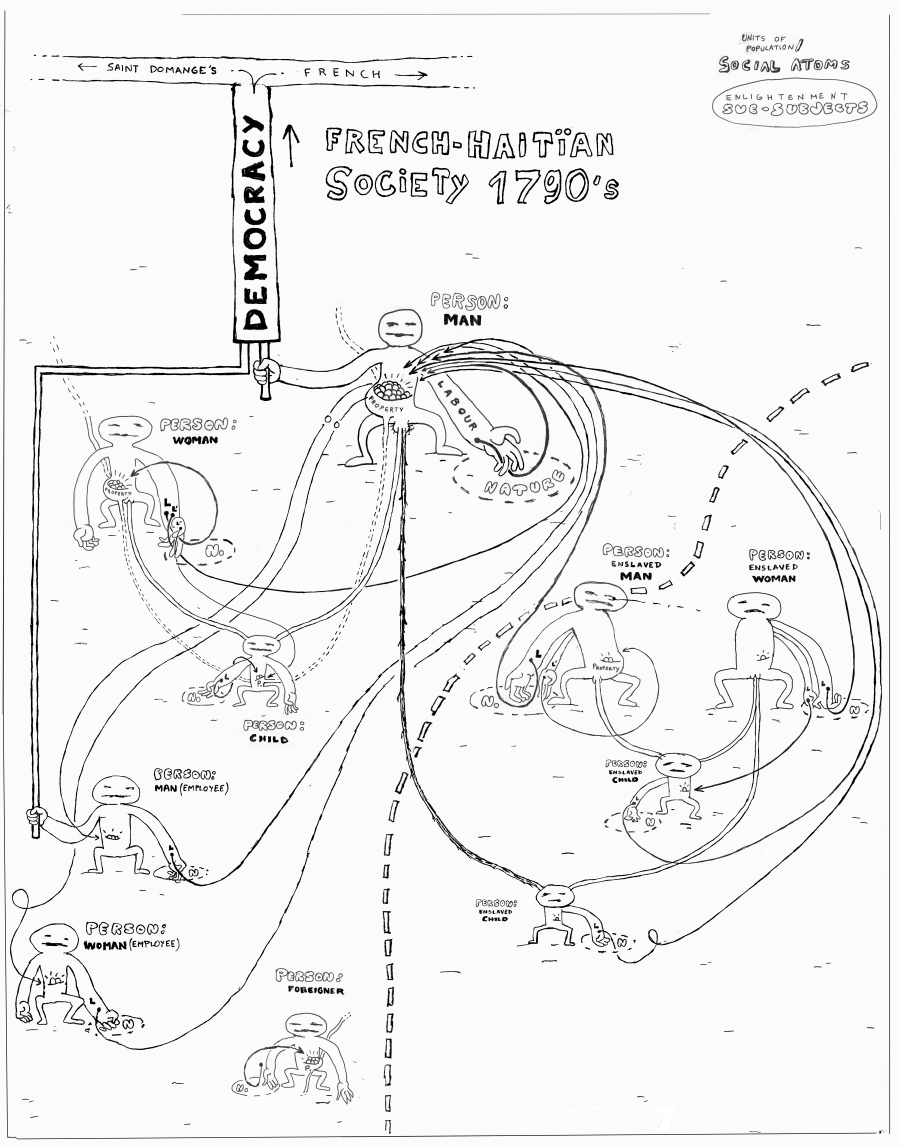
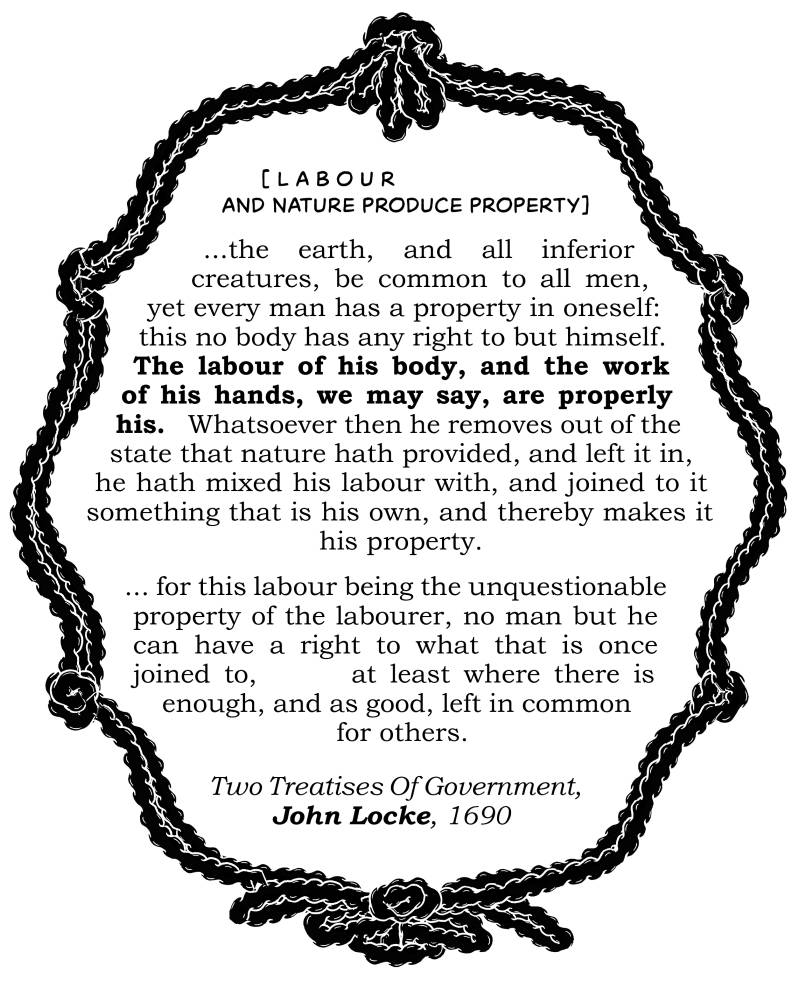
The 1690s. The Christian God and his favoured kin, the descendants of Adam, fade away. Everything worth creating is now the work of the White Western Man through his pains and labours. And that his will be the cornerstone of the new Universe.
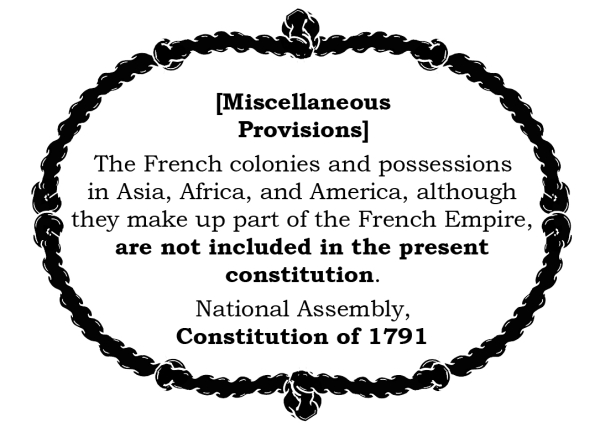
This image represents the narrative of the creation of the modern world, which heralds the materialist worldview and crystallises the notions of law and sociability that, although they had been quietly circulating since antiquity, will gain prominence during the European colonisation and remain in force to this day.
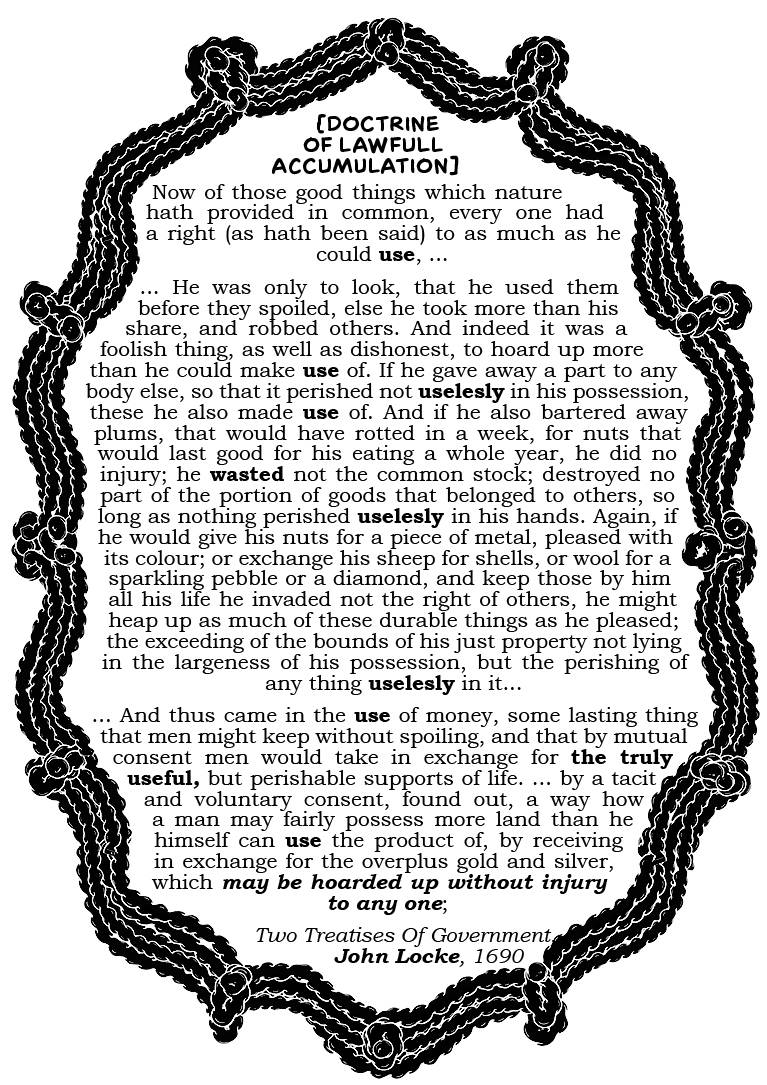
The Christian Genesis — in which God delivers the world to His creatures, particularly to the descendants of Adam — is abandoned in favour of a narrative of creation by man through his labour, and it is he who will now transform the barren primordial waste into a world of meaning, comprehensible and made to his measure. Whatever is not extracted from the natural environment through a human operation will spoil, become useless and squandered.
After the flagrant bestowal of the lands and peoples of the New World upon the Iberian Nations by Pope Alexander VI, the remaining European powers needed another story to authorise their presence in the discovered territories. While the Anglo-Saxons were discrediting the Papist narrative, in the Low Countries the naturalist logic was emerging in their proposals on the laws of the sea and the law of nations.
Natural Law will be discovered and rediscovered gradually by human inquiry, which will construct a Modern Testament — secular, demonstrative, self-sufficient — for the new civilisation. But this will not come about without dispute or discussion.
The anti-clerical Reading of the Divine and Gratuitous Bestowal of the world to all His creatures in equal share, which was gaining ground among radical sectors of the English popular classes and consolidating in the celebrated movement of the Diggers*, receives here a blunt response: it is too late for theological arguments.
The Myth of the Creation of the world is designated as archaic and inoperable, void of law, and is replaced by the myth of its Production. Human labour, which acquires particularly and specially selected properties, will become the centre of the world and, mediated by property and profit, will legitimise the new forms of domination.
--
*The Diggers proclaimed: The earth is a common treasury for all as we read in the pamphlet The True Levellers Standard Advanced, Gerrard Winstanley, 1649
Década de 1690. El Dios Cristiano y su predilecto Adán se desvanecen. Todo lo que merece ser creado es ahora obra del Hombre Blanco Occidental a través de "sus" penas y trabajos. Y en ese "sus" se esconderá la piedra angular del nuevo Universo.
Esta imagen representa el relato de la creación del mundo moderno, que anuncia la cosmovisión materialista y cristaliza las nociones de derecho y sociabilidad que si bien ya circulaban tímidamente desde la antigüedad, cobrarán importancia durante la colonización europea y se mantendrán en vigor hasta nuestros días.
El Génesis cristiano — en el que Dios entrega el mundo a sus criaturas, particularmente a los descendientes de Adán — se abandona en favor de un relato de la creación por el hombre a través de su trabajo, y él será ahora quien transforme el caldo primordial baldío en un mundo con sentido, comprensible y a su medida. Aquello que no se extraiga del medio natural mediante una operación humana se echará a perder, será inútil y desperdiciado.
Después de la entrega flagrante de las tierras y gentes del Nuevo Mundo a las Naciones Ibéricas por parte del Papa Alejandro VI, el resto de potencias europeas necesitaron otra historia que autorizase su presencia en las tierras descubiertas. Mientras los anglosajones desautorizaban el relato papista, en los Países Bajos aparecía la lógica naturalista en sus propuestas sobre las leyes del mar y el derecho de gentes.
La Ley Natural será descubierta y redescubierta paulatinamente por la investigación humana que construirá un Testamento Moderno — secular, demostrativo, autosuficiente — para la nueva civilización. Pero esto no sucederá sin disputa ni discusión.
La Lectura anti-clerical de la Entrega Divina y Gratuita del mundo para todas sus criaturas por igual, que ganaba terreno entre sectores radicales de las clases populares inglesas y se consolidaba en el célebre movimiento de los Excavadores*, recibe aquí una respuesta tajante: es demasiado tarde para argumentos teológicos.
El Mito de la Creación del mundo se designa como arcaico e inoperable, vacío de derecho, y se sustituye por el mito de su Producción. El trabajo humano, que adquiere propiedades particulares especialmente seleccionadas, se convertirá en el centro del mundo y, intermediado por la propiedad y el provecho, legitimará las nuevas formas de dominación.
--
* Los Diggers declaraban "La Tierra es un tesoro común para todos." como se recoge en el panfleto The True Levellers Standard Advanced, Gerrard Winstanley, 1649
-- --
-- --
-- --
-- --
-- --
-- --
-- --
-- --
Vases of Illumination 2023-2026
Whispers, Hubbub and Paradoxes Santa Mónica Barcelona
12.11.2025 - 01.02.2026 | Exhibition
Participants: Julie Zhen, Daniela Xaiet, Danie Valencia Sepúlveda, Khalil Talhaoui, Youssef Taki, Antoine Silvestre, Mellow Sheng, Firas Shehaden, Alys Salvador, Quimera Rosa (Ce Quimera and Kina Madno), Lucía G. Romero, Candela Quiros, Purita Pelayo, Sol Prado, Alessandra Pomarico and Nikolay Oleynikov, Norma Pérez/Muerte a la Norma, Luciana Peña, Miguel Parra Urrutia, Lizette Nin, Nadia Nadesan, Mafe Moscoso, Karo Moret-Miranda, Hache Mau, Diego Marchante, Mabel Llevat, Kleo la Faraona, Espai Kapwa (Marlon B. Quintero and Gemma Ferreón), Felix Kalmenson, Equipo Jeleton (Gelen Alcántara Sánchez and Jesusi Arpal Moya), Nadia Jabr, Queer in Palestine, .gore (Feña Errada and Roma Murúa), Nancy Garín, Helios F. Garcés, Andrea Ganuza, Antonio Gagliano, Etcétera (Loreto Garín Guzmán and Federico Zukerfeld), Fembloc, Mario Espinoza Pino, Ainhoa Nadia Douhaibi, Frau Diamanda, Thais de Menezes, Jero de los Santos, Susana Pilar Delahante, Radia Cava-ret (Violeta Ospina, Samu Céspedes, Patricia del Razo and Yazel Parra Nahmens), Colectivo Catàrsia (Gemma Ferreón, Mercedes Saya Rosés and Cinthya Fung), Aurora Carmenate Díaz, Berjer B. Capati, Camilo Brodsky B., Ingrid Blanco, Rubén H. Bermúdez, Miguel Benlloch, Samira Badran, Aimar Arriola, Asmaa Aouattah, Salma Amazian, Efrén Álvarez, Taher Ali
Vasos de Iluminación 2023-2026
Susurros, Bulla y Paradojas. Santa Mónica. Barcelona 12.11.2025 - 01.02.2026 | Exposición
Participantes: Julie Zhen, Daniela Xaiet, Danie Valencia Sepúlveda, Khalil Talhaoui, Youssef Taki, Antoine Silvestre, Mellow Sheng, Firas Shehaden, Alys Salvador, Quimera Rosa (Ce Quimera y Kina Madno), Lucía G. Romero, Candela Quiros, Purita Pelayo, Sol Prado, Alessandra Pomarico y Nikolay Oleynikov, Norma Pérez/Muerte a la Norma, Luciana Peña, Miguel Parra Urrutia, Lizette Nin, Nadia Nadesan, Mafe Moscoso, Karo Moret-Miranda, Hache Mau, Diego Marchante, Mabel Llevat, Kleo la Faraona, Espai Kapwa (Marlon B. Quintero y Gemma Ferreón), Felix Kalmenson, Equipo Jeleton (Gelen Alcántara Sánchez y Jesusi Arpal Moya), Nadia Jabr, Queer in Palestine, .gore (Feña Errada y Roma Murúa), Nancy Garín, Helios F. Garcés, Andrea Ganuza, Antonio Gagliano, Etcétera (Loreto Garín Guzmán y Federico Zukerfeld), Fembloc, Mario Espinoza Pino, Ainhoa Nadia Douhaibi, Frau Diamanda, Thais de Menezes, Jero de los Santos, Susana Pilar Delahante, Radia Cava-ret (Violeta Ospina, Samu Céspedes, Patricia del Razo y Yazel Parra Nahmens), Colectivo Catàrsia (Gemma Ferreón, Mercedes Saya Rosés y Cinthya Fung), Aurora Carmenate Díaz, Berjer B. Capati, Camilo Brodsky B., Ingrid Blanco, Rubén H. Bermúdez, Miguel Benlloch, Samira Badran, Aimar Arriola, Asmaa Aouattah, Salma Amazian, Efrén Álvarez, Taher Ali
(<atras-back)